
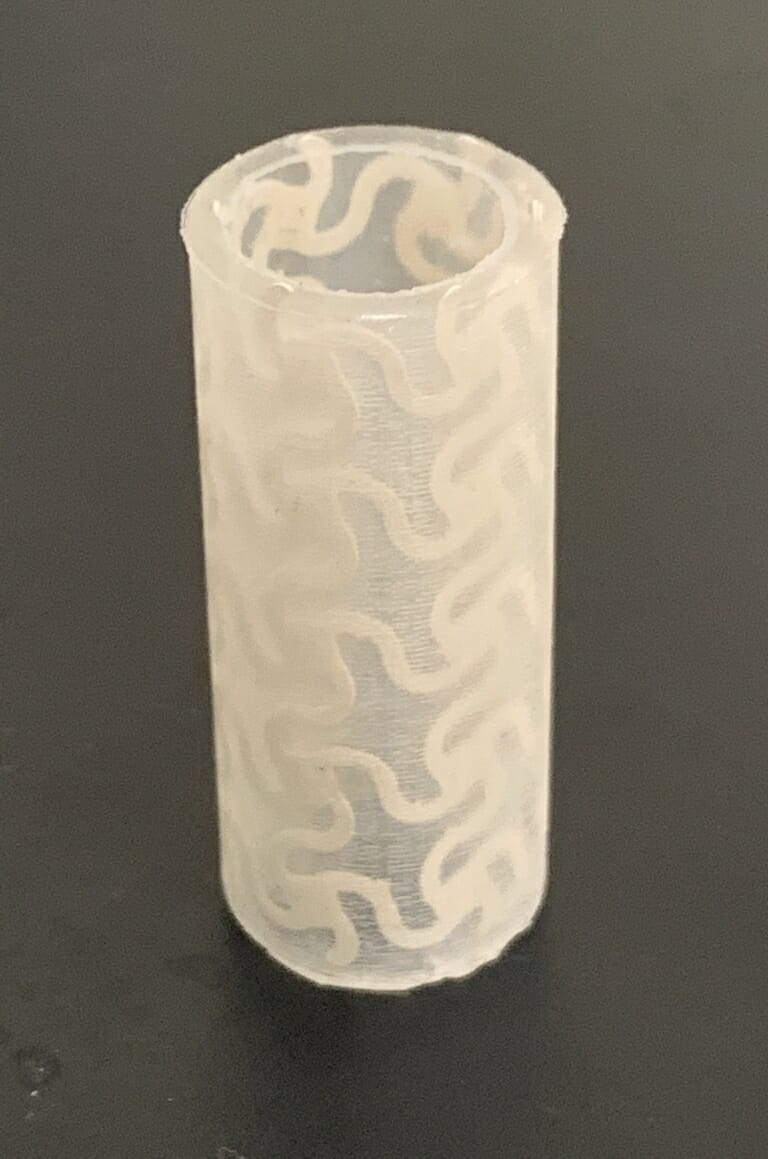
When surgeons replace part of a blood vessel — something they do in 450,000 patients per year in the United States to treat blood clots, coronary disease, stroke damage and more — the grafted vessel is monitored by CT scans, ultrasounds and other expensive imaging techniques.
.
Despite all that effort, between 40% and 50% of those grafts fail. The implantable, 3D-printed artificial blood vessel is made of a flexible composite and capable of real-time monitoring.
.
That’s one reason University of Wisconsin–Madison materials science engineers are developing a new, 3D-printed artificial blood vessel that allows doctors and patients to keep tabs on its health remotely. The implantable vessel, made of a flexible composite and capable of real-time monitoring, is described in a new study published in the journal Advanced Functional Materials by UW–Madison professor Xudong Wang and graduate student Jun Li. “This artificial vessel can produce […]
Click here to view original web page at news.wisc.edu



0 Comments