
Authors Z.S. Courtright and C.W. Hill of NASA’s Marshall Space Flight Center explore the uses of a very specific metallic ink in ‘ Optimization of Aluminum-Tin Ink Composition and Sintering in Atmospheric Conditions .’
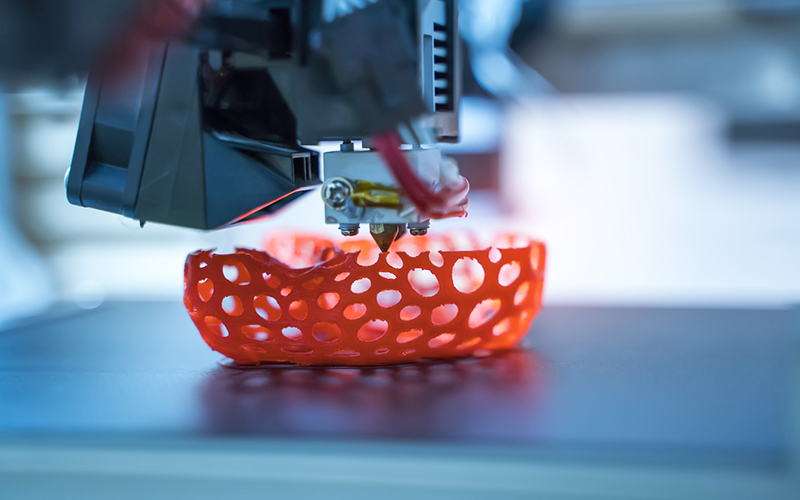
For this research project, the scientists focus on developing an ink that is able to sinter, free of the vacuum of inert gases. In studying inks with composition that may have promise, the authors use a multi-material 3D printer on site at NASA Marshall Space Flight Center (MSFC).
Aluminum-tin ink will be used on the International Space Station if it turns out to be viable for uses such as fabricating replacement parts to perform maintenance in space. “Along with its zero-gravity advantages, this ink may also have applications on Earth because it may be extruded on a substrate with precise ceramic tips in a 3D printing process,” state the authors. “This would allow the fabrication […]
Click here to view original web page at 3dprint.com

0 Comments