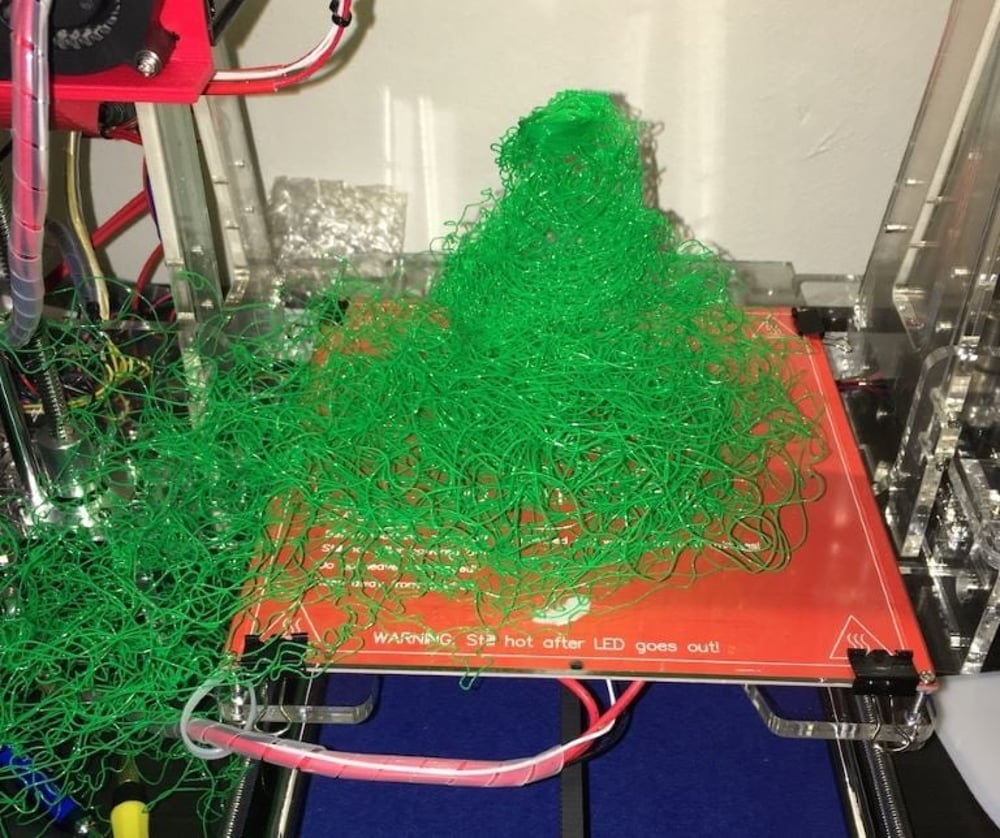
Unless you’re printing meat or something equally esoteric, your printer probably uses heat to do its job. In fact, the “hot end” is just that: Its job is to heat the filament prior to deposition. Unfortunately, the internet is full of horror stories of printers setting themselves on fire, or worse.
.
Is there a risk? Yes. Can it be managed? Yes. If you’re in the same room, turning off the power is usually enough. The real challenge comes with remote printing.
.
In this article, we’ll discuss prevention and control from a distance. We’ll discuss electrical risks, remote monitoring and control, and what you need to know to sleep well while your printer keeps chugging.
.
Note that we are focusing on hobbyist-level FDM printers. Many of our monitor and control recommendations also apply to SLS and larger FDM printers, but we’re staying away from that realm for now. Resin printers have their own issues with toxicity and gasses, but unless there’s an electrical short circuit, their single-axis mechanisms and light-based printing intrinsically minimize the risk of fire.
Click here to view original web page at all3dp.com


0 Comments