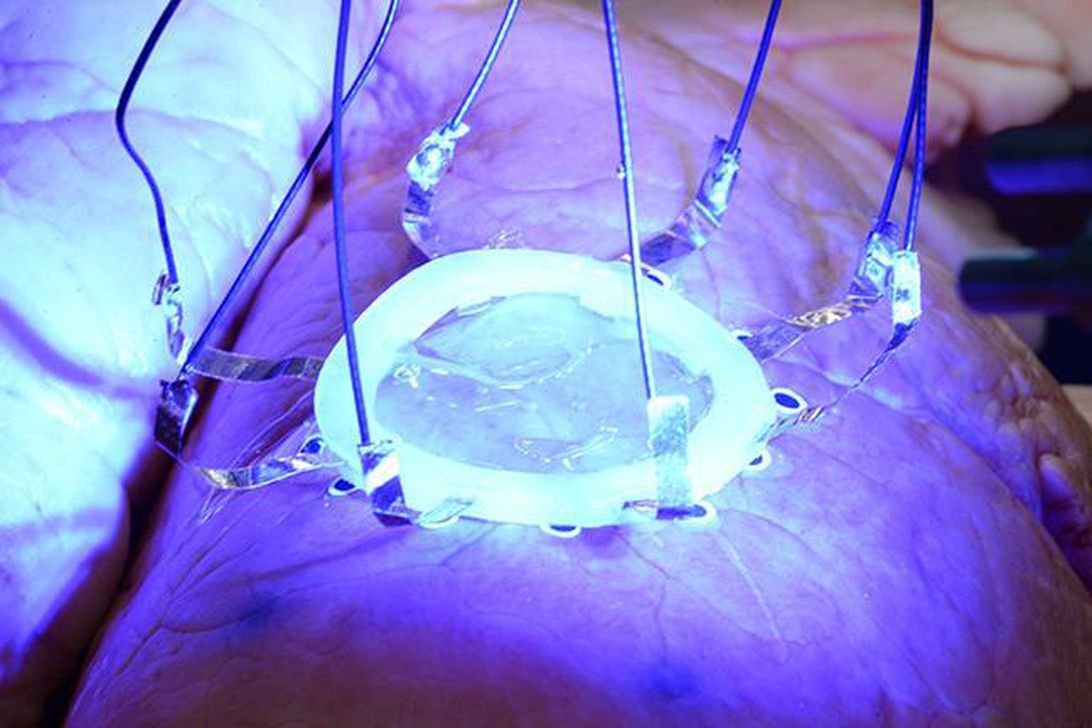
3D printing can be tricky, even when the surface you’re printing on holds perfectly still. Now imagine 3D-printing a critical medical sensor on an expanding and contracting organ like a lung or a heart.
.
That’s a whole new level of difficulty, but it’s a challenge that may be surmountable. A University of Minnesota (UMN) team of computer scientists and mechanical engineers published a study on 3D-printed deformable sensors in the journal Science Advances on Wednesday. The university released an eye-opening video showing the printing technique in action.
.
The method uses motion capture technology to track the placement of a soft sensor during the 3D-printing process. The team used markers similar to […]
Click here to view original web page at www.cnet.com


0 Comments