
Diatom frustules, with their diverse three-dimensional regular silica structures and nano- to micrometer dimensions, represent perfect model systems for biomimetic fabrication of materials and devices.
.
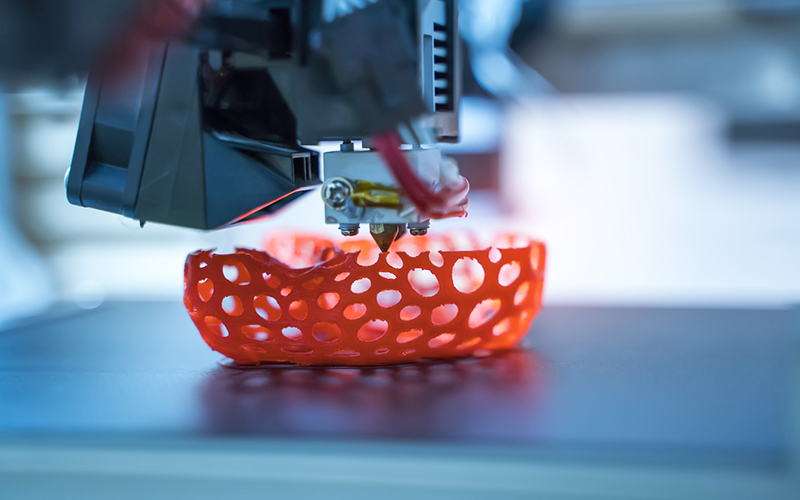
The structure of a frustule of the diatom Didymosphenia geminata was nondestructively visualized using nano X-ray computed tomography (XCT) and transferred into a CAD file for the first time. Subsequently, this CAD file was used as the input for an engineered object, which was manufactured by applying an additive manufacturing technique (3D Selective Laser Melting, SLM) and using titanium powder.
.
The self-similarity of the natural and the engineered objects was verified using nano and micro XCT. The biomimetic approach described in this paper is a proof-of-concept for future developments in the scaling-up of manufacturing based on special properties of microorganisms. Introduction Diatoms have been studied by biologists since the 18 th century because of their unique, intricately patterned silica cell walls (frustules) coupled […]
Click here to view original web page at www.nature.com


0 Comments