
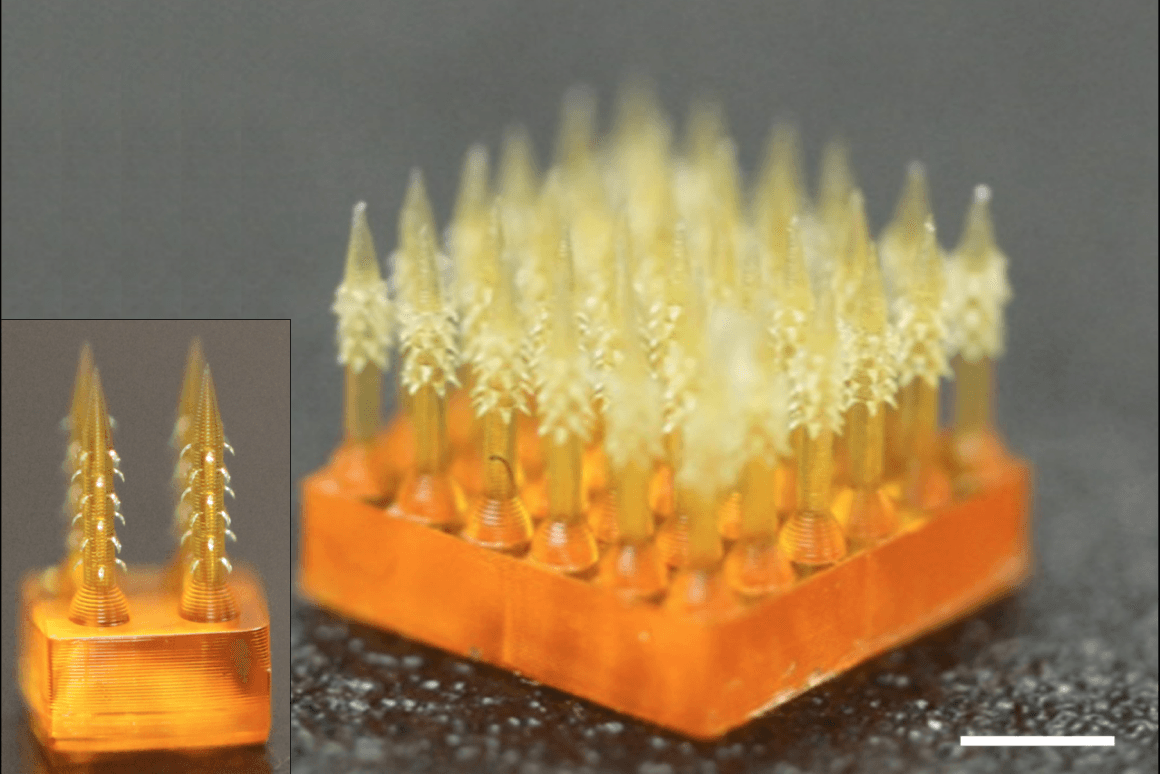
Scientists have now copied that strategy, in a system that could someday replace painful hypodermic needles. Developed at New Jersey’s Rutgers University, the new technology is a form of microneedle patch.
.
Such patches generally consist of a small, flat square of biocompatible material, with an array of tiny, medication-filled needles on its underside. When the patch is pressed against the patient’s body, those needles painlessly pierce the very top layer of the skin. They then harmlessly dissolve, dispensing their payload into the interstitial fluid that surrounds the skin cells.
.
From there, the medication enters the bloodstream. Unfortunately, though, existing microneedle patches have difficulty remaining stuck in the skin for very long. This means that they’re not ideal for the sustained release of medication […]
Click here to view original web page at newatlas.com


0 Comments