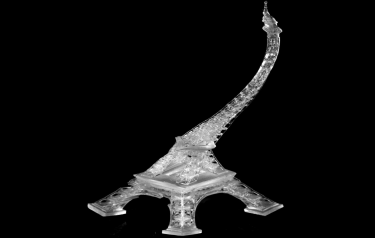
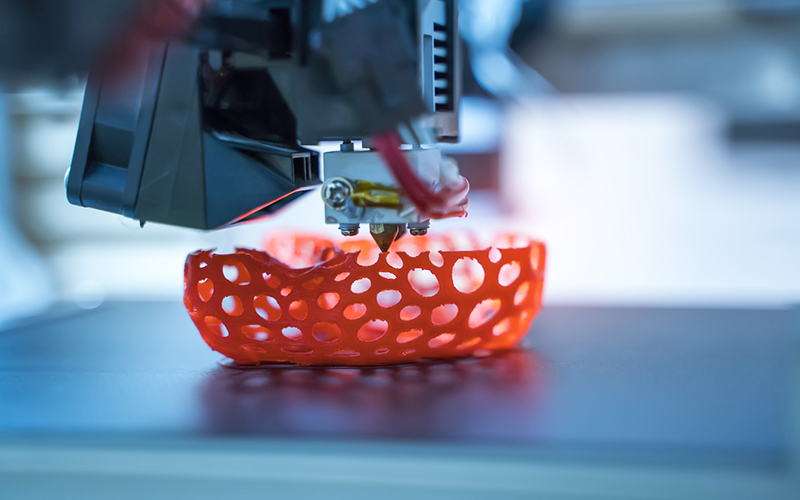
Engineers have developed a new method that uses light and robotics to improve 3D printing speed and precision, whilst providing the freedom to move, rotate or dilate each layer.
.
The speed of light has come to 3D printing. Northwestern University engineers have developed a new method that uses light to improve 3D printing speed and precision while also, in combination with a high-precision robot arm, providing the freedom to move, rotate or dilate each layer as the structure is being built.
.
Most conventional 3D printing processes rely on replicating a digital design model that is sliced into layers, with the layers printed and assembled upwards like a cake. The Northwestern method introduces the ability to manipulate the original design layer by layer and pivot the printing direction without recreating the model. This “on-the-fly” feature enables the printing of more complicated structures and significantly improves manufacturing flexibility. “The 3D printing process is no longer a way to merely make a replica of the designed model,” said Cheng Sun, Associate Professor of mechanical engineering […]
Click here to view original web page at www.dpaonthenet.net


0 Comments