Additive manufacturing (AM) has matured significantly as a manufacturing technique over the last 5 years. Along with this, knowledge of AM within companies has increased and its opportunities are increasingly discussed at board-level, especially as pandemic-driven fractures in supply chains and unpredictability in demand have spurred several industries to consider decentralized and on-demand manufacturing.
.
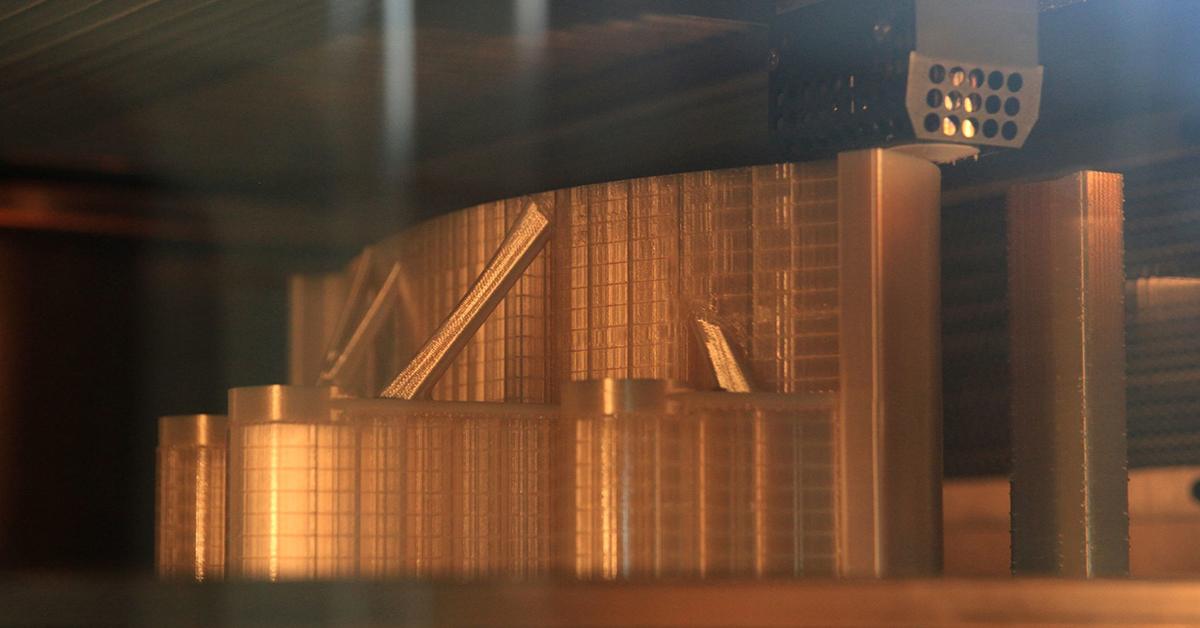
In the aerospace industry, applications of the technology are rapidly diversifying from structural components such as GE’s LEAP fuel nozzle to cabin interiors such as Airbus’s retrofit spacer panels . The industry conversation around additive manufacturing frequently focuses on printing safety-critical metal parts. However, in the meantime, the 3D printing of low-criticality plastic components has been rapidly maturing. Materialise, an EASA 21.G-certified additive manufacturing company, manufactures an estimated 26,000 3D-printed parts per year across the Airbus A350 ecosystem. These low-criticality applications have clear commercial benefits from AM, using the on-demand, tooling-free nature of the technology to eliminate overstock risk and warehousing costs. The first 3D-printed part to be placed in the cabin of commercial Airbus aircraft was this panel in Ultem, pictured on the left during its 3D printing process at Materialise, and on the right in its finished form. Low Criticality, High Potential So, […]
Click here to view original web page at aviationweek.com

0 Comments